Britten's War Requiem
"My subject is War, and the pity of War.
The Poetry is in the pity …
All a poet can do today is warn.”
Wilfred Owen
War Requiem was commissioned to celebrate the consecration in May 1962 of the new St Michael’s Cathedral in Coventry, built to replace the one destroyed by bombs. Britten used the opportunity to write a large-scale composition embodying his deeply held pacifist and humanitarian beliefs. The result is regarded by many as his masterpiece in the non-operatic sphere. War Requiem's forces are huge, requiring a very large orchestra, a smaller chamber orchestra which accompanies the soloists, two organs, three soloists, main chorus and children’s choir. There are also ideally two conductors.
Paul Spicer writes:
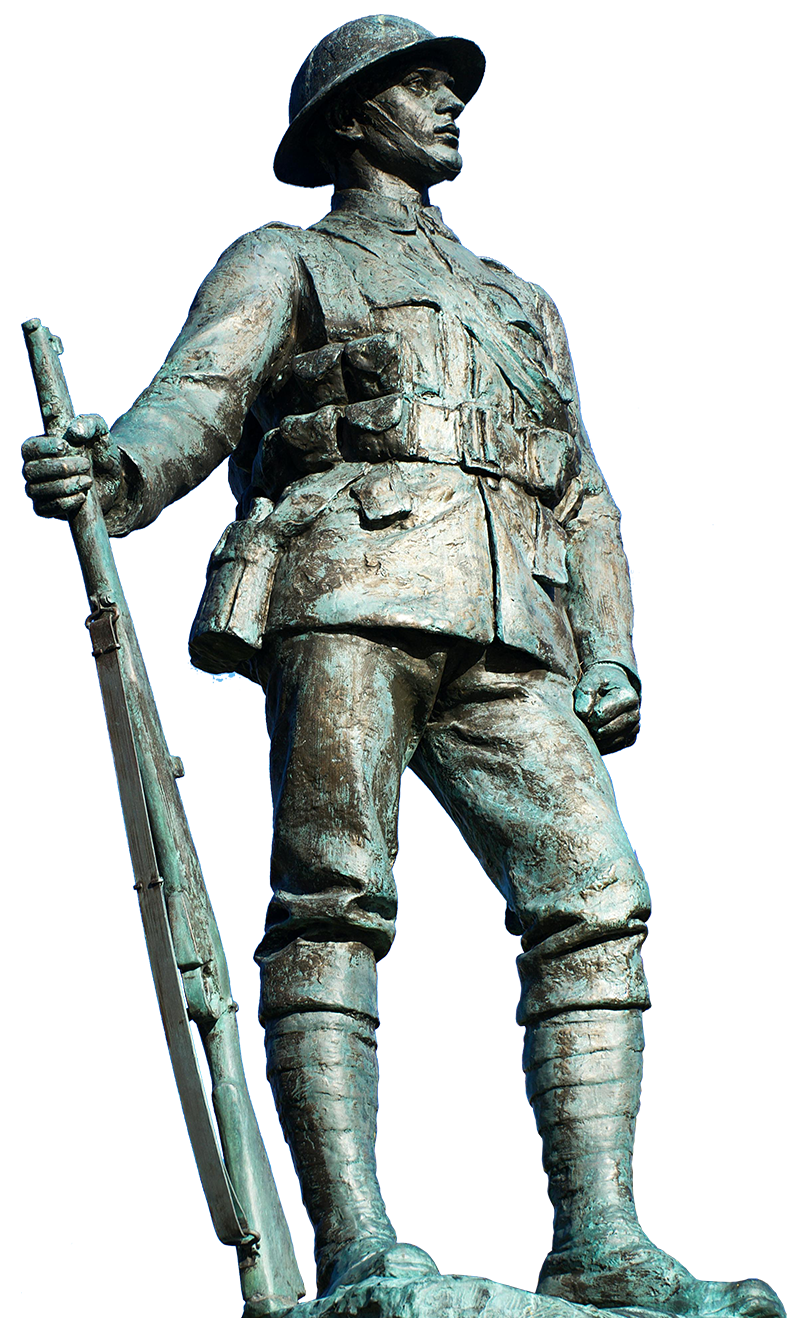
Britten's inspired idea was to mix the words of the Missa pro defunctis (Mass for the Dead) in Latin with the poems of one of the greatest of the First World War poets, Wilfred Owen. Owen was killed within days of the ending of those hostilities and this further emphasised Britten’s central theme of the criminal waste of human life in futile conflict. He uses nine of Owen’s poems which form a kind of song cycle which weaves in and out of the formal sections of the Latin Mass.
So powerful was the first performance that The Times critic, William Mann, wrote: ‘so superbly proportioned and calculated, so humiliating and disturbing in effect, in fact so tremendous, that every performance it is given ought to be a momentous occasion’. It was a score which immediately captured the public imagination. Among 20th century British large-scale choral works only Walton’s Belshazzar’s Feast had previously caused the kind of stir which the War Requiem created. Here was a deeply spiritual work on the most serious subject which caught the national mood perfectly.
When Britten’s recording was released the following year it sold 200,000 copies within the first five months which was almost unheard of for a classical work, and possibly unique for a large-scale contemporary one. This was the moment of destiny for which Britten had been preparing all his adult life. The peace movements of the 1960s, the Cuban missile crisis, nuclear testing, anti-nuclear protests, the war-weariness of the seemingly endless conflict in Vietnam, all these things contributed to the public’s readiness to hear this message which Britten so powerfully addressed. The fact that the original soloists were supposed to be from Germany, Britain and Russia further emphasised the message of reconciliation. The sad fact of Galina Vishnevskaya, the Russian soprano, being prevented from singing because she was refused permission by the Russian Minister of Culture, spoiled what would have been a truly historic cast of singers (the others were Peter Pears and Dietrich Fischer-Dieskau). But Vishnevskaya did come to record the work in 1963 with Britten conducting. Her place at the premiere was memorably taken by Heather Harper.
After the War Requiem’s early success the critical tide in some quarters turned against the piece. This was a time when the music press was increasingly focusing on the European experimental avant-garde, and composers who extended tonal traditions, such as Britten and Shostakovich, were becoming difficult to place in terms of perceived ‘relevancy’. Of course, performers and audiences remained true to the work and commentators have progressively restored the War Requiem to its central place in the musical canon. With the passing of half a century the critical concern – obsession – with fashion, style and language has faded into insignificance and one is left with the purity of a magisterial work of genius and a message which is as powerful in today’s world of conflicts as it was in 1962.