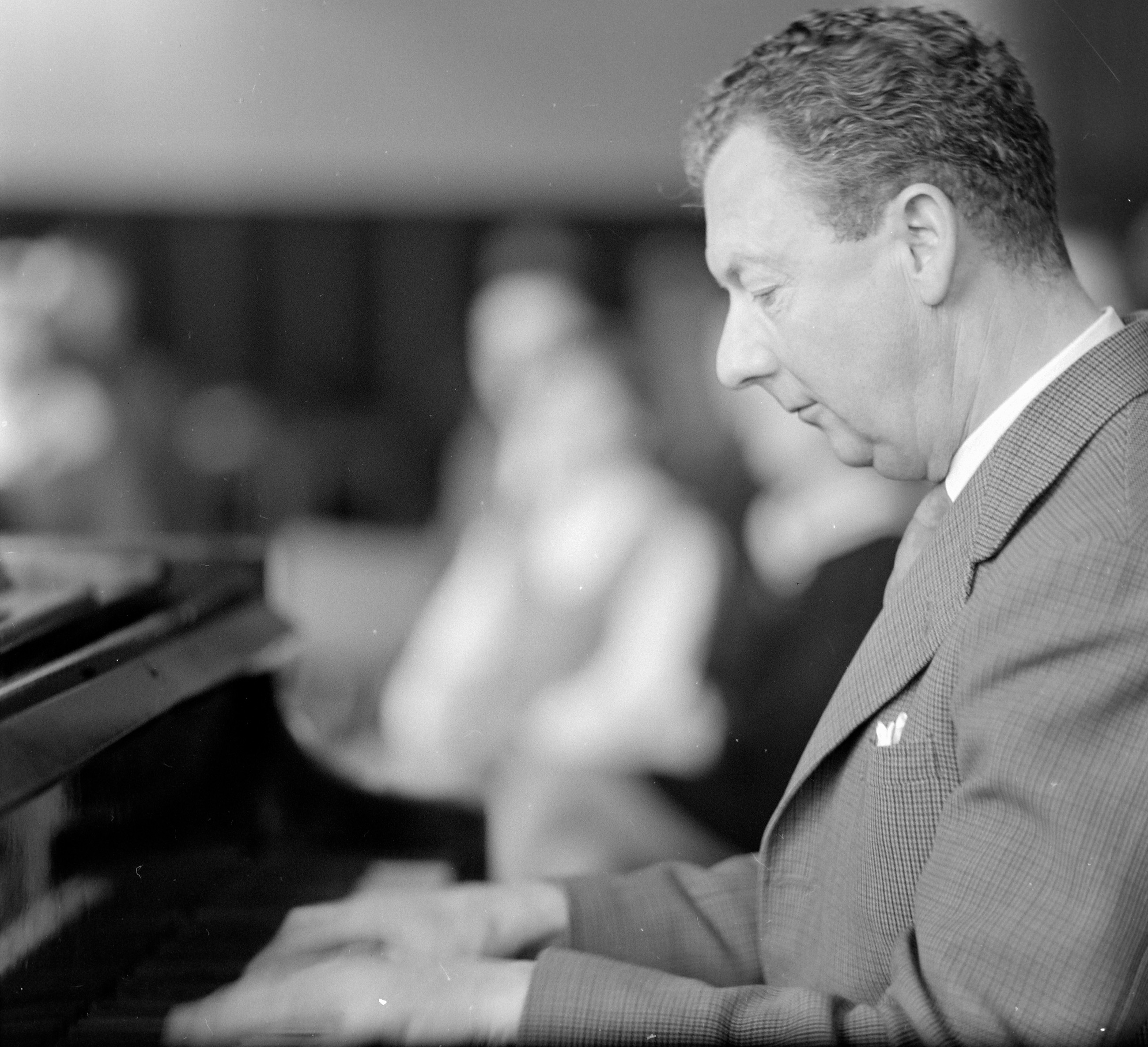
Benjamin Britten
Benjamin Britten (1913–1976)
Benjamin Britten was one of the twentieth century's most significant composers, celebrated for revitalising English opera and for a body of work spanning orchestral, choral, vocal, and chamber music. Born on 22 November 1913 in Lowestoft, Suffolk, he showed prodigious musical talent from childhood, composing prolifically before his teens. He studied at the Royal College of Music in London under Frank Bridge and John Ireland, developing a technical fluency and emotional directness that would define his mature style.
Britten's early career was shaped by his collaboration with the poet W. H. Auden and by his lifelong personal and professional partnership with the tenor Peter Pears, for whom he wrote many of his most important vocal roles. The pair's relationship, both romantic and artistic, profoundly influenced Britten's output, particularly his operas, in which Pears frequently took the leading tenor part.
His breakthrough came with the opera Peter Grimes (1945), a work that reinvigorated English opera and established Britten as a major international figure. He went on to compose a string of operas exploring themes of innocence, alienation, and moral ambiguity, including Billy Budd, The Turn of the Screw, and Death in Venice. Alongside opera, he produced enduring works such as The Young Person's Guide to the Orchestra, numerous song cycles, and chamber pieces, often written with specific performers in mind.
Britten was a committed pacifist, a conviction that found its strongest expression in his War Requiem, composed for the consecration of the rebuilt Coventry Cathedral in 1962. The work interweaves the Latin Requiem Mass with the poetry of Wilfred Owen, juxtaposing liturgical solemnity with the raw anguish of the First World War, and stands as one of the most powerful anti-war statements in music.
In 1976, shortly before his death, Britten was created a life peer, becoming Baron Britten of Aldeburgh—the first composer to be so honoured. He died on 4 December 1976 in Aldeburgh, the Suffolk town where he had co-founded the renowned Aldeburgh Festival. His legacy endures through his operas, his championing of new music, and his enduring influence on British musical life.